From First Call to Final Walkthrough in Pompton Lakes
When the call from Pompton Lakes comes in, the goal is fastest-possible source-control plus right-sized equipment dispatch. The dispatcher captures the loss type (water vs fire vs sewage vs storm), the severity (a sink overflow vs a basement filling), and the access (gate codes, building manager, COIs). The crew is moving inside 10 minutes of the call ending — not 30, not 60.
On active losses (burst supply lines, sewer backups, fire and smoke calls, wind-driven water intrusion), the standard is sub-hour arrival anywhere inside our coverage radius. Pompton Lakes sits roughly 4 miles from our Oakland base, so on a normal-traffic day that translates to 12 to 20 minutes door-to-door. Storm season we pre-stage equipment for surge events so individual response times do not slip even when call volume spikes across the corridor.
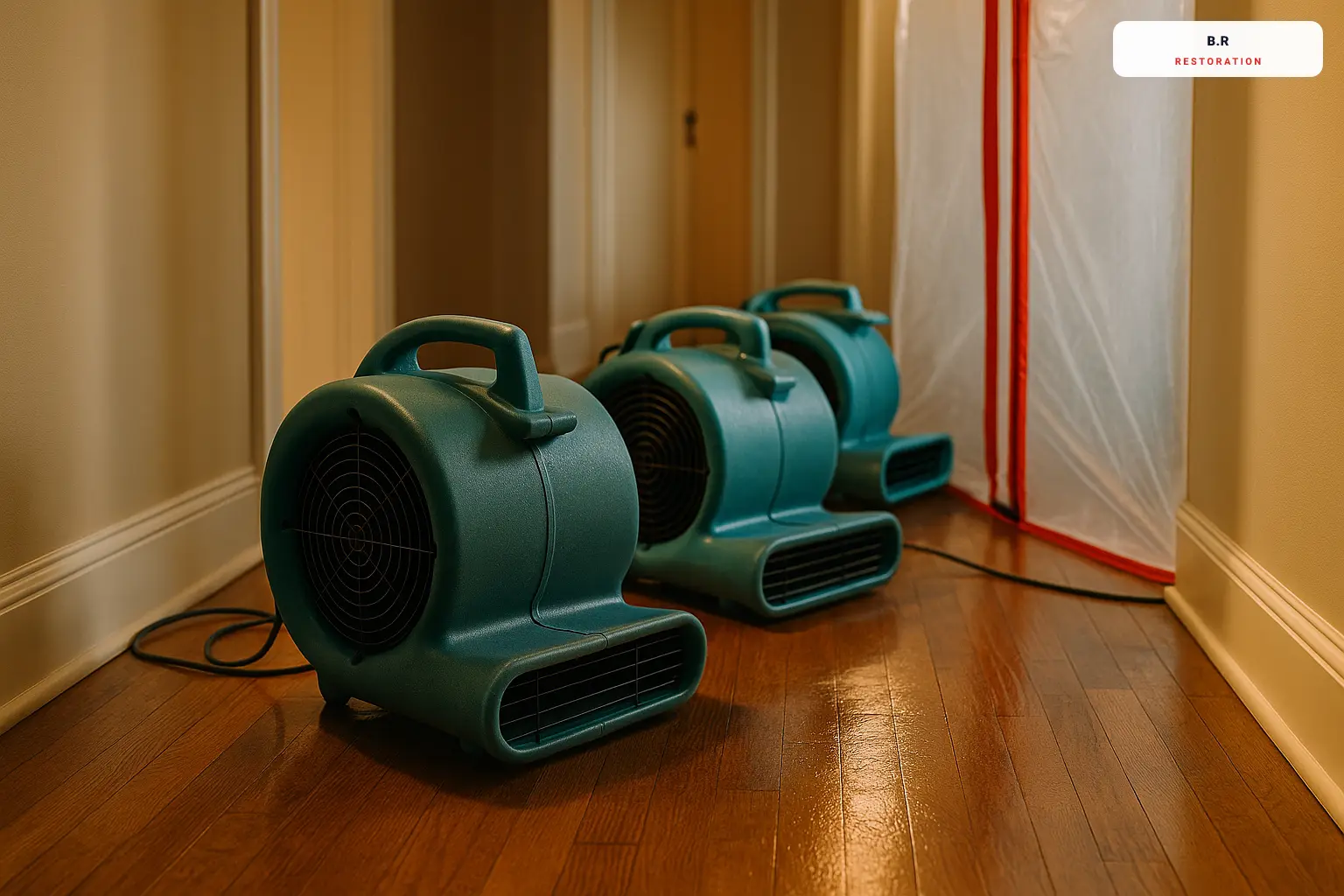
What happens once we are on-site is the same disciplined sequence on every job: source-control first (water off, electrical isolated, contaminated areas contained), then photo + moisture documentation of every wet substrate, then equipment deployment sized to the loss volume. Daily monitoring visits with logged moisture readings until every wet material returns to dry-standard. Reconstruction handled by the same crew when needed, scoped against the original mitigation documentation rather than as a separate negotiation. One contract, one phone number, one team accountable from the first call to the final walk-through.
Insurance scope handling in Pompton Lakes
Insurance handling on Pompton Lakes jobs follows the standard our carriers expect: building-diagram-mapped moisture readings, sequential photo documentation of every wet surface, Xactimate scopes with line-item pricing the adjuster can approve, and direct billing once authorization is on file. The cause-of-loss narrative we attach is the part that matters most — it determines which policy responds (homeowners, NFIP, sewer backup endorsement) and how much the carrier covers.