BR Restoration Oakland
📞 201-510-5467
Property Damage Restoration Clifton, NJ
24/7 Emergency Response

Water Damage Restoration in Oakland, NJ — Owner-Led, Locally Crewed.

Emergency property restoration for Oakland and the surrounding Bergen County communities. Real human dispatch 24/7, pre-staged equipment, documented drying.

📞 201-510-5467 Local team in Oakland 24/7 dispatch
NJ-Local Crew dispatched from Oakland
Documented Daily moisture logs + Xactimate scopes
Single Source Mitigation through reconstruction
Local Guide

Oakland Restoration — What You Need to Know

Emergency property restoration for Oakland and the surrounding Bergen County communities. Real human dispatch 24/7, pre-staged equipment, documented drying.

24/7 Emergency Property Damage Restoration in Oakland and Surrounding Bergen County Communities

Property losses don't check the calendar. Pipe bursts at 2am on a holiday weekend. Sewer backups during the heaviest rain of the year. Kitchen fires during dinner prep. Our Oakland dispatch is genuinely 24/7/365 — a real human answers, gets the address and loss type, and a truck rolls while you're still on the phone with us.

What our 24/7 capability covers: water damage emergencies (pipe bursts, appliance failures, storm-related water intrusion), fire and smoke aftermath (immediate response after the fire department leaves), sewer backup (Cat-3 protocol with full PPE), and emergency board-up after storm or fire damage to building envelopes. For non-emergency restoration work (mold remediation, planned reconstruction, content cleaning), normal business hours apply but we can adjust for client schedules.

Coverage area: Oakland, Franklin Lakes, Wyckoff, Pompton Lakes, Wanaque, plus the immediately surrounding Bergen County municipalities. Standard arrival time on emergencies: under one hour during normal traffic. During major weather events when call volume spikes across the corridor, we run pre-staged equipment from our Oakland base so individual response times don't slip even at high volume.

What the First Hour of a Property Loss Actually Looks Like

The first hour after a property loss is the highest-leverage time on the entire job. Most of the eventual claim cost is decided not by the loss itself, but by what happens (or doesn't happen) in the first 60 minutes. From Oakland dispatch our standard target is on-site within the hour, and the protocol once we arrive is built around capturing those high-leverage minutes.

What we do on arrival, in this order: confirm the source is fully off, assess loss category per IICRC S500, photograph every wet surface before equipment goes down, take initial moisture readings on each substrate, write the cause-of-loss narrative for the insurance claim. Only after that does the actual extraction equipment go to work. The sequence matters because the documentation that gets written in the first hour is what determines how the rest of the project goes — both technically and financially.

What clients sometimes try to do before we arrive (and what we ask them not to): lifting wet drywall (it crumbles and complicates demo), running heaters (drives moisture deeper into materials), throwing damaged contents away (becomes unprovable losses), signing AOB paperwork from contractors who arrive unsolicited. The 30-60 minutes between your call and our arrival are best spent moving valuables out of the cascade path and photographing the loss for insurance.

Water Damage, Fire Restoration, Mold Remediation, and Sewage Cleanup in Oakland, NJ

Our Oakland crew handles the full property restoration scope: water damage from pipe failures and storm events, fire and smoke damage with full content cleaning and HVAC decontamination, mold remediation per IICRC S520, sewage cleanup with full Cat-3 protocol, and the reconstruction work that follows each. Same crew handles mitigation through reconstruction — no handoff to a separate contractor mid-project.

Most calls fall into one of these patterns: residential water loss from a pipe burst or appliance failure (most common), storm-related water intrusion through a damaged building envelope, sewer backup in a basement (combined-sewer territory in older NJ towns), kitchen or chimney fire smoke damage, and chronic-moisture mold growth that's been building behind walls for months. Each has its own protocol, its own equipment requirements, its own insurance treatment. We are equipped for all of them on every dispatch.

For multi-unit properties — condos, townhouses, commercial — we add the coordination layer: per-unit Xactimate scopes, building-management communication, COIs on file, after-hours noise scheduling. For single-family residential we keep it simple: clear scope, daily updates, single contract from first call to final walkthrough.

Why Documentation Matters More Than People Think

The single biggest accelerator on a residential restoration claim is whether the scope arrives in a format the adjuster can settle without a callback. Sounds like a small thing. It isn't — it's the difference between a claim that closes in 2 weeks and one that drags through 3 rounds of supplements over 3 months.

Our standard documentation package on every Oakland job: photos of every wet surface before equipment goes down, moisture readings logged on a building diagram (so the adjuster sees WHERE the readings were taken, not just the numbers), Xactimate scope at carrier-standard pricing for the NJ market with line items tied to IICRC S500 protocols, equipment runtime logs (air movers + dehumidifiers, hours each), final clearance moisture readings showing every wet substrate returned to baseline.

This documentation is what makes the difference between scopes that close cleanly and scopes that get challenged. Adjusters who see clean documentation regularly come to recognize the source and approve faster. Adjusters who see vague or incomplete scopes push back, request supplements, and slow the entire project. We invested in the documentation discipline because the carrier relationship is what determines whether we can keep doing this work at scale — short-cuts on documentation hurt the claim AND the next claim AND the one after.

Restoration Service Across Oakland, Franklin Lakes, Wyckoff, Pompton Lakes, and the Bergen County Footprint

From our Oakland base we serve a tight radius across Bergen County and the immediately surrounding municipalities. Standard arrival times: Oakland addresses inside the hour during normal traffic; Franklin Lakes, Wyckoff, Pompton Lakes, and Wanaque typically reach in 20-40 minutes. Outside that footprint we will tell you honestly whether we can be there fast enough to be useful, or whether you should call somebody closer.

What our Bergen County clients see most often: residential water losses (sump pump failures, supply line bursts, water heater leaks, dishwasher and washing machine appliance failures), storm-related events (nor'easter wind damage, tropical-storm-remnant flooding, frozen-pipe winter bursts), fire and smoke restoration (kitchen fires being the dominant pattern), sewer backup (combined-sewer territory in older parts of Bergen County), and chronic-moisture mold problems usually discovered during home renovation or sale inspection.

The NJ housing stock varies widely — from 1920s plaster-walled bungalows to 1950s suburban tract construction to 2000s townhouse + condo development. Each calls for a slightly different restoration approach. Our crew works the Bergen County housing patterns regularly enough that we recognize what's behind a wall before we open it.

Emergency Restoration

Full-scope Restoration for Oakland Property Owners.

Water Damage Restoration

24/7

Burst pipes, dishwasher leaks, water heater failures, sump backups — full mitigation through reconstruction, billed direct to your carrier.

  • 24/7 emergency dispatch
  • Truck-mounted extraction
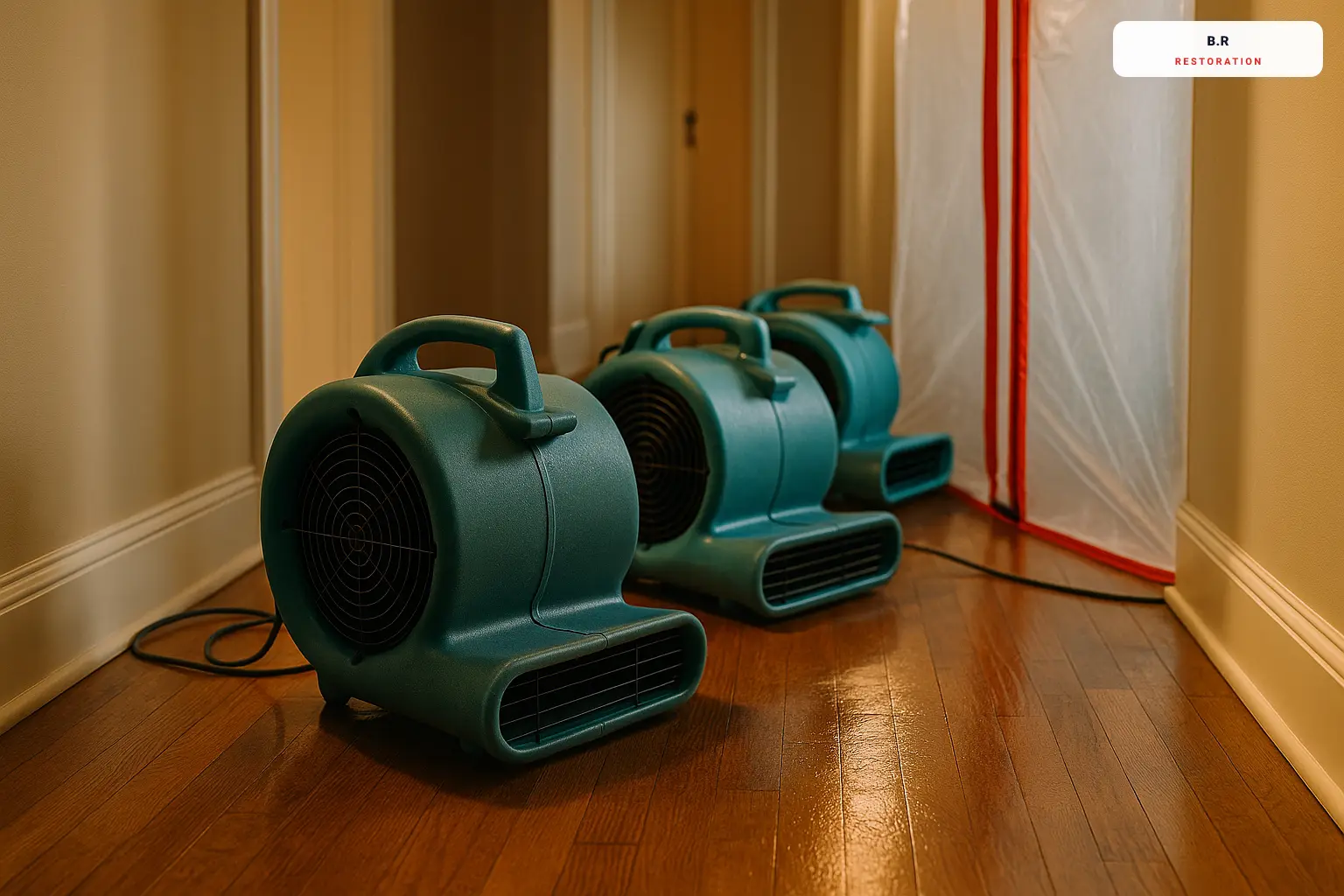
  • Industrial drying equipment
Learn more

Fire Damage Restoration

24/7

IICRC S700 protocol applied to Bergen County fire and smoke losses. Char removal, ozone or hydroxyl odor neutralization, full reconstruction.

  • Soot + smoke odor removal
  • HVAC decontamination
  • Pack-out + content cleaning
Learn more

Storm Damage Restoration

24/7

Roof breach, blown siding, fallen-tree intrusion — emergency stabilization first, then documented mitigation, then reconstruction on one contract.

  • Emergency board-up + tarping
  • Wind-driven rain water extraction
  • Roof + envelope repair
Learn more

Mold Remediation

Negative-air containment, antimicrobial application, and porous-material removal under Bergen County conditions where summer humidity already runs high.

  • IICRC S520 protocol
  • Negative-air containment
  • HEPA filtration
Learn more

Sewage Cleanup

24/7

Sewer-line failures and toilet overflows handled the right way: full PPE, antimicrobial treatment, documentation that satisfies adjusters and health code.

  • IICRC S500 Cat-3 protocol
  • Full Tyvek + HEPA respirator PPE
  • Porous-material removal to flood line
Learn more

Reconstruction

Drywall replacement, flooring (hardwood, LVP, tile, carpet), trim, cabinetry, paint — single contract from emergency response through final walkthrough.

  • Drywall replacement + finish
  • Hardwood, LVP, tile, carpet flooring
  • Cabinetry + trim work
Learn more
24/7 Emergency

Pipe burst, basement filling up, smoke damage — call our Oakland dispatch now.

We dispatch a tech 24/7 across the Oakland metro. Average on-site time is under an hour.

Call 201-510-5467
The difference

Why Customers Choose Us

Real reasons. No invented stats, no manufactured awards.

  • 01

    IICRC Standards, No Shortcuts

    S500 for water, S520 for mold, S700 for fire. We follow the protocols because they are the only approaches that produce work that holds up. Adjusters approve our scopes; insurance closes our claims.

  • 02

    Fast Where It Matters

    Sub-60-minute response to active losses across Bergen County. Pre-staged equipment for known surge periods. The first hour is what determines the eventual claim size — we get there fast and we are equipped on arrival.

  • 03

    Honest Cause-Of-Loss Documentation

    Sudden vs gradual, wind vs flood, supply line vs sewer — the framing determines coverage. We document accurately so the right policy pays the right portion. No inflating, no understating.

Process

How It Works

  1. 01

    A Real Person Answers

    No automated phone tree. No call-center. You get a live dispatcher who listens, asks the right questions, and tells you what we are sending.

  2. 02

    Same-hour Response

    Truck rolls out of Oakland dispatch with the right equipment for what you described. Average on-site time under an hour anywhere in Bergen County.

  3. 03

    Honest Assessment

    We tell you what we see in plain language. What needs to come out, what can be saved, what the insurance discussion looks like, what the realistic timeline is.

  4. 04

    Document for Insurance

    Photos, moisture readings, written cause-of-loss narrative — all in the format your adjuster expects. We handle the documentation so you do not have to.

  5. 05

    Finish the Job

    Mitigation flows directly into reconstruction. Same crew, same project manager, same accountability. We do not hand off mid-project.

Service Area

Serving Bergen County

Our Oakland crew dispatches across Bergen County reaching Franklin Lakes, Wyckoff, Pompton Lakes, and Wanaque typically in 20-40 minutes. Outside that footprint? Call us anyway — we will tell you straight whether we can be there fast enough to be useful or whether you should call somebody closer.

Counties Covered

  • Bergen County, NJ

Cities We Service

Each Bergen city below opens a local page with arrival times from our Oakland base and the loss patterns we handle most often in that municipality.

Not sure if you're in our area? Call 201-510-5467 and we'll tell you in 30 seconds.
FAQ

Frequently Asked Questions

If you don't see your question, just call or message us.

How do you decide what materials to remove vs save? +

IICRC S500 has clear material removal criteria based on water category and how long the material was wet. Cat-1 water + reached within 24-48 hours = often save in place. Cat-3 water = porous materials always come out. Borderline cases get the moisture-meter test: substrate that returns to dry standard with equipment runtime gets saved; substrate that stalls above dry standard for 5+ days gets removed.

What certifications do your technicians hold? +

Our crew holds IICRC certifications in Water Damage Restoration (WRT), Applied Structural Drying (ASD), and Applied Microbial Remediation (AMRT) per IICRC S500/S520 standards. Specific cert status of any technician on your job is available on request — we do not stretch certifications we do not actually hold.

Do you offer free estimates? +

For property losses (water, fire, storm, sewage), we provide a no-cost on-site assessment and an Xactimate scope of work. For non-emergency reconstruction or mold remediation we provide a written estimate after on-site evaluation. We do not give phone-quote prices for restoration work — accurate scoping requires seeing the loss in person.

What happens if mold is found during the dry-out? +

If we discover existing mold growth during a water restoration job — which happens when a slow leak was already growing mold before the recent loss — we contain that area immediately and remediate per IICRC S520 before reconstruction starts. The discovery becomes a supplemental scope item for the carrier. Done correctly, both the water loss and the pre-existing mold get resolved as one coordinated project.

How do you document moisture readings for insurance? +

We map every wet substrate on a building diagram, take initial moisture readings with calibrated meters, log readings at every daily monitoring visit, and compare against the manufacturer's dry-standard for that material. Final clearance readings show every wet substrate returned to baseline. Adjusters get the full record — building diagram, meter readings by date, equipment run logs. This is what gets the claim approved without back-and-forth.

Do you handle storm damage to roofs? +

Emergency tarping yes — we secure compromised roof openings to prevent further weather intrusion. Permanent roof replacement we coordinate with a licensed roofing contractor in our network rather than doing in-house. The water damage that follows roof intrusion is our scope; the structural roof itself is a roofer's scope. We handle the coordination so you have one project manager not two.

What is the difference between mitigation and reconstruction? +

Mitigation is the emergency phase — stopping the loss, extracting water, drying the structure, removing damaged material. Reconstruction is the rebuild — replacing drywall, installing flooring, painting, finishing. Many restorers only do mitigation and hand the rebuild to a separate general contractor, which often creates scope-coordination problems. We do both as one contract so the rebuild matches what was scoped during mitigation.

Call Now • Oakland

Need a Restoration Crew in Oakland? Call a Live Dispatcher Right Now.

One phone call gets a truck rolling. Real Oakland team, real local response time, no automated phone tree. We'll be on site fast.

📞 Tap To Call 201-510-5467

24/7 Emergency Dispatch

📞 Call 201-510-5467